
EN 13795 and AAMI PB70 Explained: Choosing the Right Surgical Gown Level

Why Two Systems: Europe and the United States
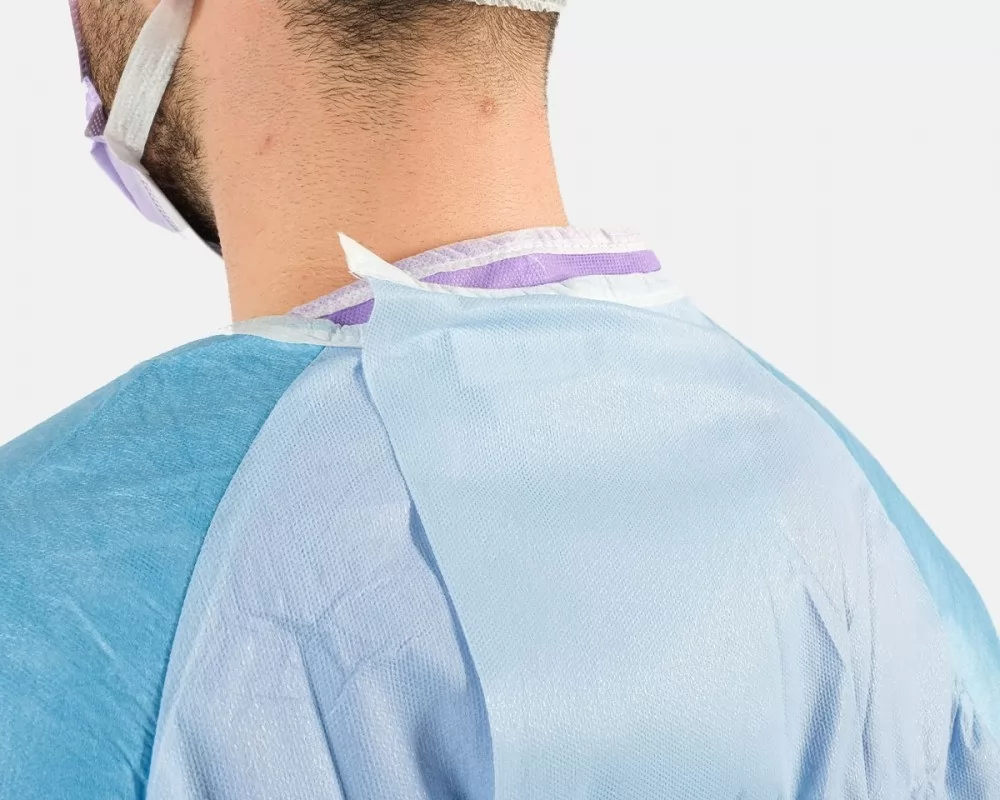
Surgical gowns protect both the patient and the surgical team from the transfer of liquids and microorganisms. Two systems are used to classify them. In Europe, gowns are tested and classified under EN 13795. In the United States, the liquid barrier performance of gowns is classified under ANSI/AAMI PB70, and gowns are placed on the market through the FDA, often via the 510(k) pathway. Buyers who sell in both markets need to understand both systems, because a gown can be described very differently in each.
EN 13795: Standard and High Performance
EN 13795 divides a gown into critical areas and less critical areas. Critical areas are the parts most likely to contact blood and body fluids, mainly the front of the gown and the sleeves. Each area is tested for properties such as resistance to wet and dry microbial penetration, liquid penetration (hydrostatic head), cleanliness, linting, and bursting and tensile strength.
Gowns are then classified as Standard Performance or High Performance. High Performance gowns must reach stricter requirements in the critical areas, especially for liquid penetration and wet microbial penetration. They are chosen for long procedures, procedures with a lot of fluid and situations with mechanical stress such as leaning or pressure on the gown. Standard Performance gowns are suitable for shorter, drier procedures.
AAMI PB70 Levels 1 to 4 and the Tests Behind Them
AAMI PB70 sets four levels of liquid barrier performance, from lowest to highest:
- Level 1: minimal risk. Tested for water impact penetration (AATCC 42). Used for basic care and standard isolation.
- Level 2: low risk. Water impact penetration (AATCC 42) and hydrostatic pressure (AATCC 127).
- Level 3: moderate risk. The same tests as Level 2 with stricter requirements. Used for many surgical procedures.
- Level 4: high risk. Resistance to synthetic blood (ASTM F1670) and viral penetration (ASTM F1671). Used for long, fluid-intensive procedures and where pathogen resistance is needed.
In AAMI PB70, the level refers to the critical zones of the gown. A gown labelled Level 4, for example, must reach Level 4 performance in all of its critical zones.
Why Levels Do Not Convert One to One
It is tempting to say that EN 13795 High Performance equals AAMI Level 3 or Level 4, but this is not correct. The two systems use different test methods, different pass criteria and different definitions of critical zones. EN 13795 also covers microbial barrier, cleanliness and strength, while AAMI PB70 focuses on liquid barrier. A gown may meet one system without automatically meeting the other. If you sell in both markets, the gown must be tested against both, and the claims on the label must match the test reports.
SFS Fully Reinforced and Partially Reinforced SMS Gowns
The gown fabric is what decides which level it can reach. Two common designs are:
- Partially reinforced SMS gowns: an SMS body with extra reinforcement on the front and sleeves. A cost-effective choice where the critical zones need more protection than the body.
- SFS fully reinforced gowns: a spunbond/film/spunbond laminate across the whole gown. The film gives a liquid-proof barrier everywhere, which makes SFS fabric suitable for AAMI Level 3 and Level 4 and for EN 13795 gowns.
Our SFS fabrics are made with our own breathable films (12 to 20 g/m²) laminated to polypropylene spunbond.
Breathability and Comfort
A barrier gown that does not breathe becomes hot and uncomfortable during long operations. This is why breathable film matters: it blocks liquids while letting water vapour pass. Our Bodygard SFS gowns have a breathability of 4,360 g/m²/day, which helps keep the surgical team comfortable without giving up barrier protection.
Our FDA 510(k) Cleared Gowns
For the US market, our surgical gowns are FDA 510(k) cleared under K202845 and K221139. Our medical products are also produced for EN 13795, so we can support customers selling in Europe and the United States.
Sterile Supply and Private Label
We supply medical finished goods including gowns and drapes. Drapes are available sterile and non-sterile. Private label is available, so you can sell gowns and drapes under your own brand. If you produce your own gowns, we can also supply the fabric or develop a custom laminate through our contract and toll lamination service.
How to Choose
- Start with the procedure: duration, amount of fluid and mechanical stress.
- Choose the market: EN 13795 for Europe, AAMI PB70 and FDA for the United States, or both.
- Choose the fabric design: partially reinforced SMS or fully reinforced SFS.
- Check comfort: breathability matters for long procedures.
- Ask for datasheets and test reports before you decide.
Need help choosing the right gown level? Email info@felixnonwovens.com or visit our contact page. Datasheets are available on request, and our team will help you match the gown to your market and procedure.